
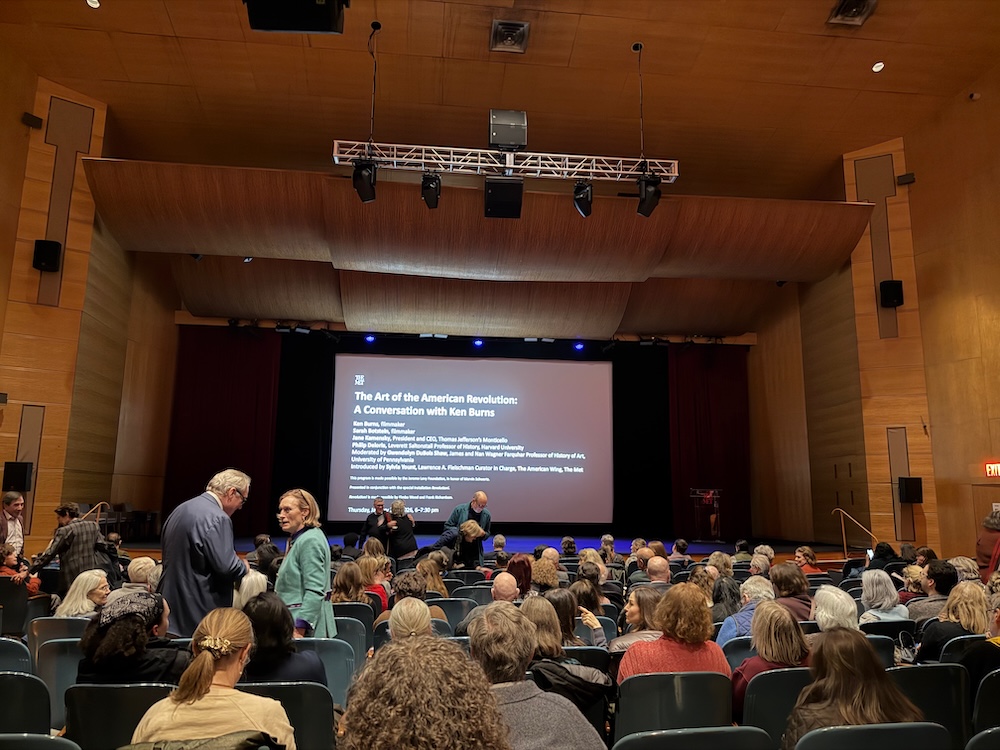
I bought a ticket to see Ken Burns talk about his latest documentary on The Revolution War last night at the Metropolitan Museum of Art here in New York City. I very much needed to get out of the house after many days of avoiding the freezing temperatures outside. It turned out to be very much be what I needed this week in response to the last week’s of news and death in Minneapolis, MN, but also more wider in this artificial moment that is inescapable as part of our world. (Both are connected)
After the museum director opened the event up, she said that the man himself would come out and introduce a 30 minute clip of the documentary, and then after we would get a discussion with Ken Burns and Sarah Botstein who made the documentary, but also Jane Kamensky, President and CEO at Thomas Jefferson’s Monticello, and Philip Deloria a Professor of History at Harvard University–with the discussion moderated by Gwendolyn DuBois Shaw a Professor of History of Art at University of Pennsylvania.
Ken Burns came out and asked if the doors to the auditorium were locked? Then said, OK, we are going to watch all twelve hours of the documentary, and nobody was leaving until it was done. ;-)
The video walkthrough was a nice distillation of the 12-hour series, but the talk was definitely where the impact was. It was a look at the filmmaking behind the documentary, and how it was the first documentary they’ve done where there wasn’t photos and news reels. There was beginning to be photos and news for the Civil War, and then much, much, more for World War II and Vietnam. The group dove deep into how they used paintings from the era, and applied the classic Ken burns pan and zoom to drawings and paintings from the time. Which blended nice with the Revolution! Exhibit at The Met, and the experience of Jane Kemensky, Philip Deloria, and Gwendolyn DuBois Shaw.
I came out of the session with a lot more respect for the classic Ken Burns technique, something I’ve seen many people mock and is something I use regularly without much deep thought. But the way that Ken talks through his technique as applied to paintings of George Washington, or to many of the watercolors they had commissioned for the documentary, left me feeling the deep intentions behind how he wields his technique. The paintings had familiar images of George Washington from our US dollars and quarters, but when he started a scene on the African servant to Washington, then zoomed and panned out to show the entire painting, and accompanied with just the right narrative about Washington being a slave owner and land speculator, you really get a new feel for how the technique can be used in meaningful ways as part of storytelling.
Jane Kamensky noted how the Ken Burn’s technique can be used to teach people how to look at art, which is a skill that has been lost since the early 20th century, with the introduction of radio, television, and other media formats. The combination of these art historians share how they interpreted the filmmaking behind the documentary changed how I will approach my experience at The Met next time I go. Ken Burns noted that the art will reveal all the secrets to you if you spend the time looking at it and studying it, rather than just reading the square placard at the bottom of the painting. The way they systematically broken down each painting that was used in the documentary, and wove in the narrative Ken Burn’s and team overlayed was a fascinating look at art that has expanded how I will look at art in the future, but also use as part of my storytelling.
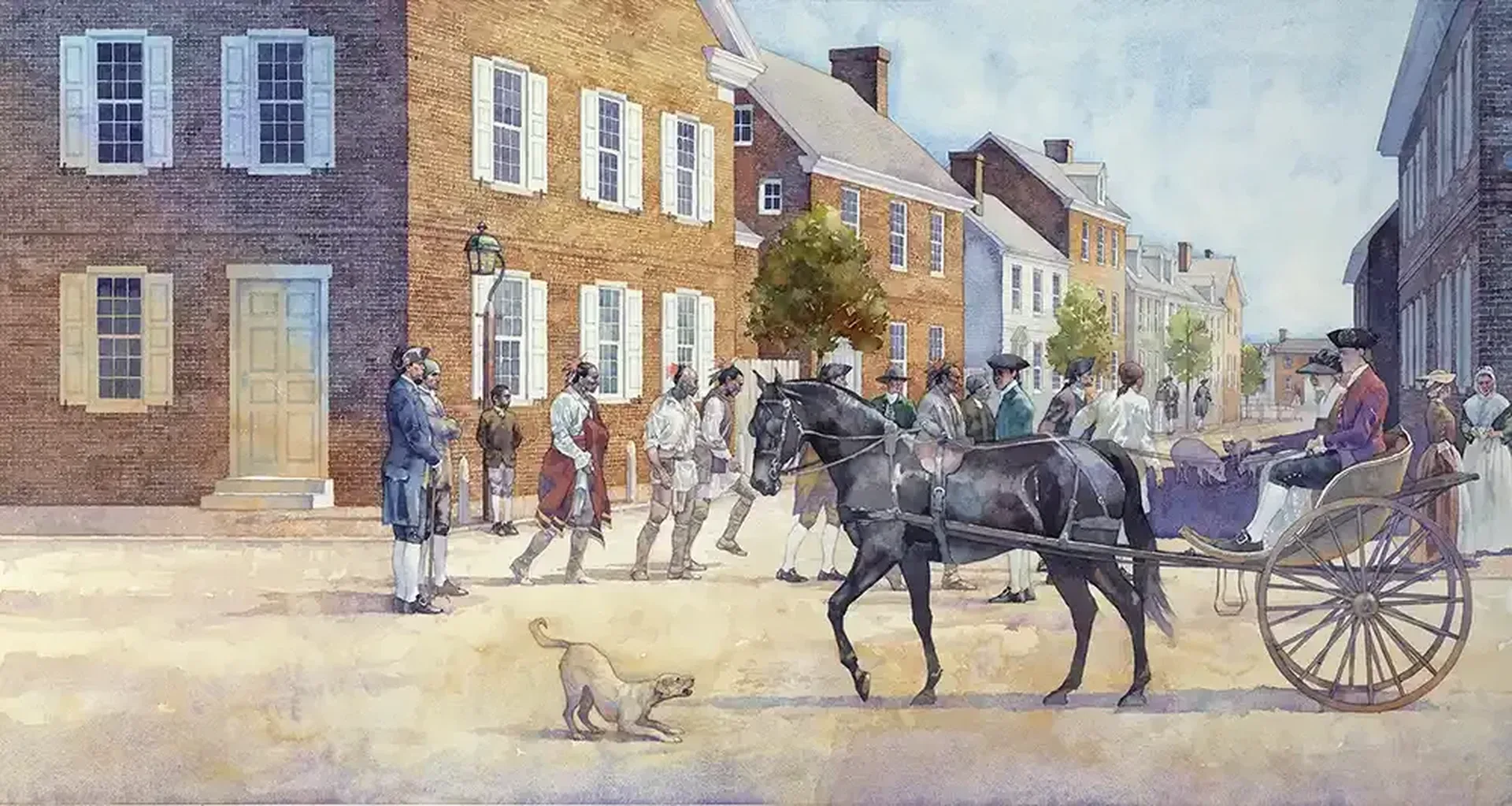
They had watercolor paintings commissioned for the documentary to fill in the gaps in storytelling where they couldn’t find any existing work. Ken Burns made it very clear that they committed real artists to create this works and paid them to contribute to the project. He also made that very clear for voice overs and the other visual or audio works. That they would find the source of artifacts, find the right voice actor, and pay for the work or access to the work, ensuring that the documentary possessed that depth. He was clearing pushing back on the AI narrative in very important ways that I don’t think consumers of “content” today think much about. He talked about the 25+ tracks in which the one watercolor possessed, from the narrator, to the dog barking, and the horse hoofs clopping on the cobblestone-—it all had it’s place in the depth of the story being told.
Another fascinating part of the conversation is they noted that most of the iconic paintings we have in our collective memory were painted after the Revolutionary War. Very few drawings and paintings were truly in the moment, and they worked to address this. They talked about they wrestled with some of the imagery being from decades or a century later, and how it reflects not he original story, as well as how we see things today. This deconstruction of the imagery and how it is received by us Americans was fascinating. They approached with a blend of filmmaking and academic honesty that was powerful, which continued with ensuring facts made it in. Such as no mention of Betsy Ross, the original “Betsy Ross” flag, as well as exclaiming “The regulars are coming. The regulars are coming”, instead of “The British are coming. The British are Coming”. Separating the not so factual layers that have been laid down since the war.
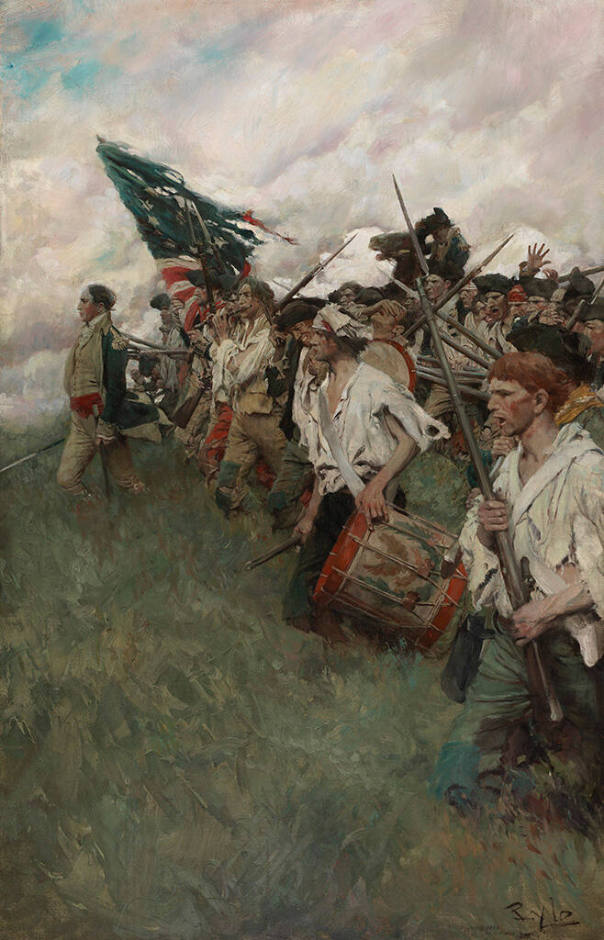
Both Sarah Botstein and Ken Burns connected the imagery from the Revolutionary War, and specifically the Join or Die and Boston Massacre imagery to what is going on in Minneapolis and wider right now. Ken went one step further and connected Minneapolis with the iconic imagery that came out of Vietnam. You really get how the usage of these iconic paintins, drawings, and photography pulls at the emotions and get us thinking in certain ways. I found myself going to sleep last night thinking about the images I saw of the Revolutionary War and with the images I am being bombarded with in Los Angeles, Portland, Minneapolis, and around this country in the last year.
This experience was what I after the news coming out of Minneapolis. I began the week just spun out about the 2nd amendment hypocrisy that exist in this moment. I was steeped in the 2nd amendment shit growing up, and the Revolutionary War shit was a significant part of that. My first gun was a .22 Ruger, but my second gun was a .54 caliber Hawkins Black Powder rifle–a Revolutionary War recreation. So the 2nd Amendment and the Revolutionary War are all wound together in my brain. Making it a very difficult week for me, and I thankful that I privileged enough to be in NYC, and heading over to The Met where I am a member, and attending this event was exactly what I needed to balance things out for me a bit. I will be thinking about this conversation for a long time. It has changed how I will see art. It will change how I tell stories and use the Ken Burns technique in my video editing. Super thankful!

